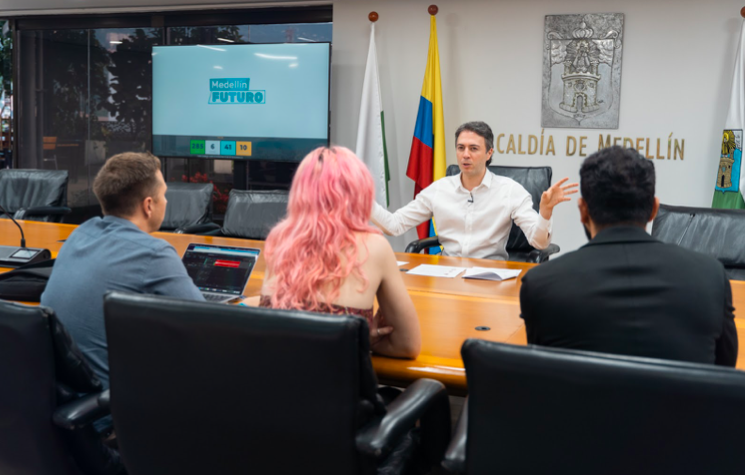
In an interview with Mayor Daniel Quintero, I delved into how after almost a decade of being chosen as the most innovative city in the world, Medellín is bringing the culture of technology and entrepreneurship directly to children and young people.
Various media articles from around the world have already highlighted the city of Medellín as an example of transformation and resilience, going from being the most violent city in the world in the early 1990s, with almost 1,000 homicides per month, to the most innovative city in the world in 2012. The city received this recognition from Citigroup and The Wall Street Journal, in partnership with the Land Urban Institute, a nomination that surpassed cities of major statures, such as Tel Aviv (Israel) and New York (USA).
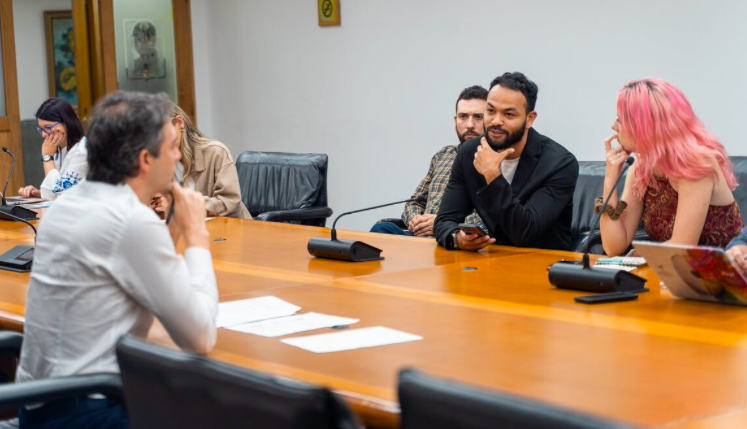
Daniel Quintero, current Mayor of Medellín, held nothing back during our interview and for more than an hour, he talked with journalists from Espacio, answering questions on various issues that have involved him, from the Hidroituango problem to efforts in education.
He recognized that far from being a perfect city, Medellín has a large number of problems and challenges to overcome. In the interview, he talked about efforts that the current administration is making to address the main problems that the city has, with Quintero and his team approaching them with a clear vision that highlights social transformation through technology, education, and entrepreneurship. In this effort, they hope to help children and young people, and by proxy their families, dream of a better future.
When talking about Medellin it is impossible not to bring up the city’s past. Many young people were protagonists during the city’s most violent time, but the mayor, whose term ends on December 31, 2023, ensures that young people should not be seen as a problem but as an opportunity.
“Medellin became the most violent city in the world because it turned its back on young people.”
Mayor Quintero
“The greatest challenge facing world leaders today is the fight against inequality and climate change, situations that are perfectly connected in Medellín: the poorest are at the same time those who live in the areas most vulnerable to natural disasters,” says Mayor Quintero. “We believe that Medellín became the most violent city in the world because it turned its back on young people. Medellin’s strategy now is to change that narrative and tell young people that they are important and that there is a mayor who treats young people as potential entrepreneurs,” he concludes.
With this in mind, the city is betting on innovation and technology as the main tools for social transformation. The current government is working on an interesting strategy that seeks to change the mentality of young people across the cityscape so that they are motivated to start a learning path in technology. Free registration, computers for high school students, and spaces dedicated to encouraging connection are all part of the new ecosystem that Medellín is building to encourage learning and creativity in problem-solving.
When asked about the importance of promoting this vulnerable social group, the Mayor’s message was:
“What young people especially need is to recognize that they are relevant to the future of their community, the city, and the country. We invite you to train in the skills of the Fourth Industrial Revolution, take your ideas to the next level, generate your ventures and carry out technological projects to improve your quality of life.”
The dream and the need to be a ‘Silicon Valley’
According to Quintero, Medellín “could once again become the most dangerous city in the world.” He assures that any unequal city can, because “that is the danger of inequality, making young people vulnerable to violence.” For this reason, he recognizes that Medellin must not slow efforts when it comes to providing greater opportunities to young people.
Under his administration, the city continues to focus on expanding and improving its already well-known modern mass transportation system, reducing CO2 emissions with the desire to be globally recognized as an eco-city, and finally bringing cultural spaces to every corner of the metropolitan landscape. However, his message is mainly aimed at the great effort that Medellín is making toward developing initiatives that are strategically designed to train citizens in technology, innovation, and entrepreneurship processes.
Thanks to this clear objective, the city went from being a simple municipality to becoming a special District for Science, Technology, and Innovation. This is a part of a process of social, urban, and economic transformation that will help Medellin establish a 360-degree innovation ecosystem where all of the actors can truly connect for a common cause. Together, the city can address and solve the different issues of local (and even global) interest, involving citizens, governments, entrepreneurs, companies, and educational institutions to articulate efforts.
“Medellín has a strategy to become an economy of knowledge,” said Quintero before detailing the District’s vision to change the rules of the game.
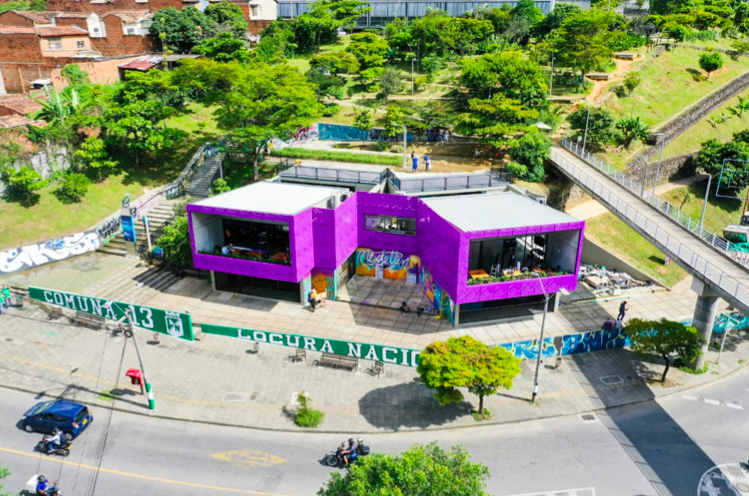
Changing the rules of the game boils down to the strategy known as “Software Valley”. “Software Valley” is an initiative that seeks to bring special centers to the city’s neighborhoods, helping democratize access to opportunities offered by technology, and generating an “Industry 4.0” in Medellin.
These spaces termed Software Valley Centers (six have been inaugurated to date) are being implemented in different neighborhoods with the aim of improving employability conditions and re-industrializing the city. In addition to stimulating the creation of enterprises and strengthening technology-based companies; the idea is to bring Ruta N’s culture of innovation directly to the city’s neighborhoods.
This year the mayor’s office has delivered 150,000 computers to young students from public schools in the city, the largest delivery in Latin America, and the plans mentioned by Mayor Quintero indicate that another 100,000 will be delivered next year. These efforts are a fundamental part of the Software Valley strategy, which seeks to create a culture of education and innovation in the city’s high school students. The Mayor mentioned that a computer can be an excuse to intervene in the educational system and provides access to technology—which can be the key to getting out of poverty.
The strategy is interesting all its own, but some results are starting to appear and provide credibility as well.
According to figures revealed by the mayor during the interview, in 2019 only 60 young people opted for careers related to technology at the Pascual Bravo University Institution, but for this semester 687 young people enrolled in technological programs. This noteworthy growth shows that the conversation around technology, the fourth industrial revolution, and the Software Valley is beginning to change the minds of young people in the city.
Specialized innovation nodes: the next step to promoting a connected city
With several initiatives in play, the next big challenge for the city of Medellin is to connect all efforts so that the program of the Special District of Science, Technology, and Innovation can see the fruits of the city’s labor.
“If children and young people receive a computer, then we need to connect them not only to an internet network, but also connect them to each other to solve global causes—one of them being climate change. In the Software Valley Centers young people can experiment with technologies, coworking spaces, learn how to program, 3D print, and use Arduino, or augmented reality, among others,” explains the Mayor of Medellín.
But the city knows that it must go even further. The mission now is to go to community colleges and encourage connections between students to solve challenges, create companies, found ventures, and integrate them with businessmen, government, universities, and other actors for the consolidation of an ecosystem capable of solving both local and global problems.
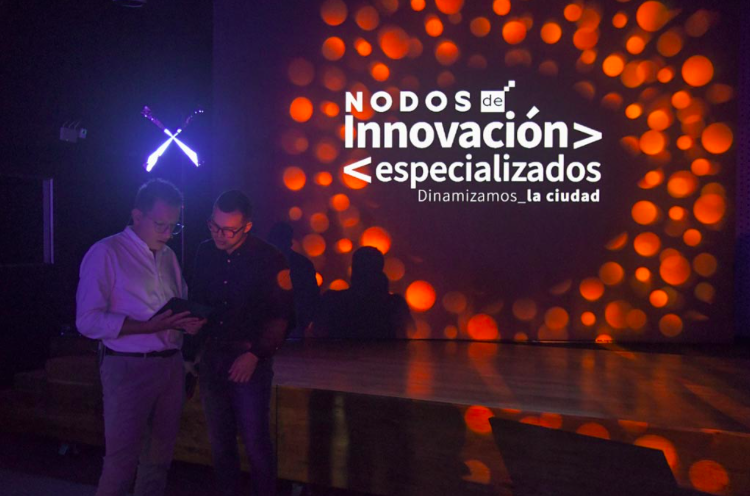
For this reason, the Specialized Innovation Nodes project was announced, a strategy that has already been tested in three verticals with which it seeks to create a connected ecosystem in Medellin.
“We want to create an ecosystem for people to connect, collaborate, and share information, but also feel inspired and excited to get involved,” Quintero highlights. The objective of the Specialized Innovation Nodes is to consolidate the science, technology, and innovation ecosystem around ten themes that will serve as meeting points so that the “quintuple helix” can be achieved.
The “quintuple helix” is a cooperation between the public sector, academia, private companies, citizens, and international actors. By listening to the voices of all the actors, articulating their knowledge, and promoting agile methodologies, open innovation with a focus on sustainability and continuity is generated. This confluence of knowledge, experiences, and resources is aimed at providing solutions to real needs.
The ten themes addressed by this program include nodes to solve challenges related to climate change, agribusiness, GovTech (Digital Governance), pollution, mobility, health, public services, security, solid waste, and education. To achieve this, “drivers” have been recruited, which are people who are at the forefront of each of the topics and have the mission of integrating all the actors of the ecosystem for the generation of projects, lines of research, the transfer of knowledge, the attraction of public-private investment, and networking activities.
The end goal is to achieve a cultural transformation that contributes to the construction of an intelligent and sustainable territory in the city of Medellin.
It’s not a perfect city
Of course, Medellín is not a perfect city; no city in the world is. The city has a large number of environmental, mobility, poverty, and social inequality problems—demonstrating that the city still has a long way to go on many fronts.
Quintero refers to the difficult fight against climate change as one of the biggest problems currently facing the city. This is because it is not only affecting infrastructure but also increasing poverty and inequality, and therefore the number of vulnerable young people.
As a consequence, the entire city sewage system has reached its limit and at least 50,000 families who live near streams must be relocated because due to climate change they are now in a risk area.
Medellin is also the third most densely populated city on the planet in terms of the urban area and the largest city in Latin America built between mountains—making Medellin a high-risk zone for flooding. After two years of constant rains, the Mayor mentions that, according to the National Planning Department, just 1 degree higher temperature will lead to 40% more rain in Medellín.
These are just a few examples of the many challenges that Medellín faces, but with its resilience, it has proven capable of rising to adverse occasions. Further, the approach that the city has taken in solving its main social problems could be inspiring for other metropolitans in Latin America, as well as the world.
Now, in order to live up to the title to which it was dubbed more than ten years ago, Medellín needs to start putting efforts into its business infrastructure. Despite being the second largest city in Colombia, and an entitled innovative and entrepreneurial city, Medellin is still not an epicenter of high-impact startups, not even at a local level in Colombia.
Although the city has a large base of important international companies and its business fabric is vital for the country, the startup ecosystem still has much ground to cover. This is why it makes sense that the current main focus of Medellin is aimed at strengthening itself as a hub for entrepreneurship and innovation, which, someday, could even solve the larger challenges that the city faces.