Colombian president Gustavo Petro is in the US capital for a crunch summit on bilateral relations. What’s behind it and what could happen?
After months of extremely strained relations with the US, Colombian president Gustavo Petro is now in Washington to meet his counterpart Donald Trump. The actual head-to-head is scheduled for tomorrow, Tuesday February 3rd. The Colombian team also includes key advisors such as the Canciller, Interior Minister, the USA business envoy and the Defense Minister.
While both sides have cooled their rhetoric, there’s plenty of unpredictability in both camps and past relations have been rocky to say the least. Petro and other members of his delegation had to be issued temporary visas just for the diplomatic visit, as Trump had previously cancelled his visa in September.
That also applied to highly controversial Interior Minister Armando Benedetti, as well as members of Petro’s family. Before leaving, the president tweeted a particularly unusual post on X specifying that he’d visited his mother before leaving in a mildly ominous tone. He then expounded on love and sex in a non-sequiter.
Petro is also somewhat predictably calling for protesters to fill the Bolívar square (as long it’s not raining) to defend the minimum wage increase, democracy and peace in Colombia. The first two have nothing to do with the Washington summit, while the latter isn’t seriously under threat from the US at this point.
Why is the Colombian president visiting Washington this week?
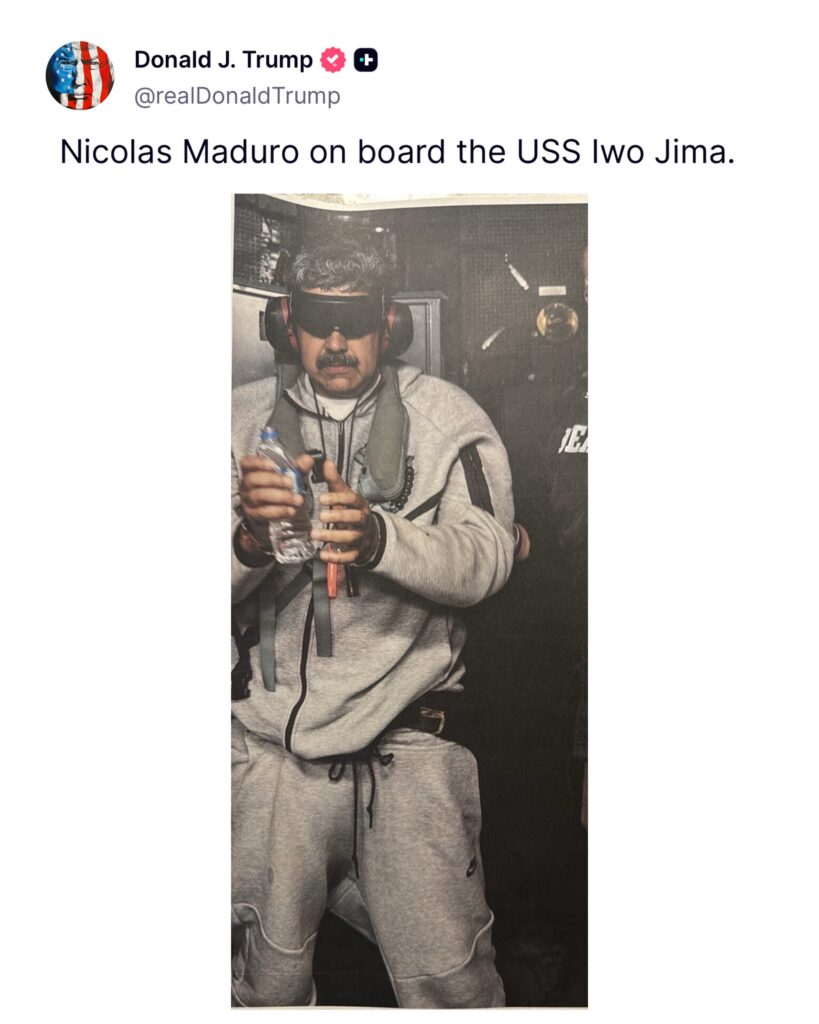
This was Trump’s offer after the war of words following Nicolás Maduro’s capture in early January. He initially suggested a phone call, after which a follow-up invitation to meet face to face in the White House was offered.
After that initial call, the pair appeared to have ended up on relatively good terms, and for now there appears to be a wary calm between the Palacio Nariño and the White House. It’s too early to talk of a bromance, but there was certainly a rapid de-escalation.
The US president pointedly praised Petro’s tone in his tweet after they spoke over the phone, indicating that the Colombian president had been rather less bullish one on one compared to his public speeches and tweets. That hasn’t changed much in recent weeks.
Petro appears to have struck a far more conciliatory note when actually talking to the US president on Wednesday. For his part, Donald Trump also turned down the heat, saying it was a great honour to speak with the Colombian president and reaffirming his respect for the Colombian people.
The Colombian president went on to say that he had cleared the air and underlined that he is not connected to the illegal drug trade. He pointed out that he has stepped up seizures of drugs and has in fact been threatened various times over his life by drug cartels.
He’s gone further over the past week or so, claiming that estimates of Colombian coca crop capability in production are wildly inaccurate, especially when they come from foreign observers. He hasn’t helped matters by refusing to publish his own figures, but a recent high-profile seizure off the coast of Portugal won’t have hurt.
Petro was highly critical of Trump’s actions in the Caribbean from the outset. He warned Trump “not to wake the jaguar”, denounced his strikes on boats in international waters and convened an emergency meeting of the UN security council to investigate the Maduro affair.
Bad blood between the pair goes back a long way, with Trump’s grandstanding over deportations of Colombian nationals being met with strong pushback from Petro. Although the Colombian president eventually backed down from initial threats to not let the planes in, he met the deportees upon landing and symbolically undid their handcuffs.
Petro’s fierce criticism of the military build up in the Caribbean and Trump’s position on migration in terms of ICE and so forth had led to him and his estranged wife Veronica Alcócer being stuck on the Clinton List along with advisor and Interior Minister, Armando Benedetti.
The truth is that antagonistic public rhetoric plays well for both Petro and Trump, regardless of how much damage it may do to the reputation of either country. They both get to play the big man and impress their base, which both need right now in the face of domestic woes.
It’s entirely possible that both sides will have a relatively amiable meeting in which progress is made, before going back to lightly criticising one another in order to please their local audiences. Trump seems not to mind people doing that, even going so far as to encourage NYC mayor Zohran Mamdani to call him a fascist in a recent meeting.
What can Petro’s team come back with?
There are a number of points to cover and a range of different outcomes on each. Military and security cooperation and guarantees are perhaps most important, with drug exportation, migration, ICE, visas and tariffs also on the table.
Much will depend on whether the meeting is televised or behind closed doors. Petro will by far prefer the latter and likely want to avoid as much as possible the media bearpit that Trump often sets up for visiting politicians.
Colombia will be looking for guarantees and assurances that US military action won’t happen on local soil. There’s no suggestion that Trump is looking to do that in the short term anyway, but it’s not hard to believe that could change, for example making a strike on cartel leaders within Colombian borders.
The USA might refuse to give an official guarantee but indicate that the option is currently off the table, which would still calm tensions significantly. Petro has made it clear he considers US military action a real danger. There’s also the possibility that the countries could agree to work together and cooperate. Again, this is likely to be far more palatable to the Colombian public.
Information sharing and support in terms of hardware and technology would be of great use to the Colombian military, after all, and both countries share a common interest in cracking down on the cartels, at least on paper.
Trump might demand a greater show of good faith from Petro in terms of action taken to combat the cartels, which is tricky. The Colombian state has been relatively efficient over the last three years at capturing drug smugglers and received little credit for it from Washington.
Colombian governments of all hues have struggled to deal with the problems of armed non-state actors, whether paramilitaries, cartels, guerillas or any mix of the above. Trump has little patience for this sort of thing and is results-oriented. That could be an excuse for unilateral action or could lead to an offer of help. Colombia will want the second of those options.
No economic instrument is more beloved by Donald Trump than tariffs, his self-declared ‘favourite word in the language’. Colombia is currently still at the global standard of 10% and won’t want that to change. That means it could be a powerful negotiating tool and Trump has threatened an increase in tariff rates at various points, as he does with many countries.
Colombia has turned more and more towards China in recent years, with Beijing helping guide construction of the Metro project in Bogotá. Trump may be looking to try and keep Colombia closer to the US economically, as fewer and fewer Latin countries treat their northern neighbour as the most important part of their trade network.
Visas, too, have been contentious. Waiting times at the US embassy were getting better but often involve months of waiting time. That hasn’t been helped by the recent freeze on residency visas for a swathe of countries including Colombia.
Speeding up processing times in Bogotá for basic American tourist and business visas would be relatively low-hanging fruit in negotiations. If both sides could agree, that would make a lot of people’s lives a lot easier and be popular in Colombia.
In the best case scenario, Colombians can hope for no additional tariffs, military guarantees and cooperation and an easing on visas. In the worst case, Trump will impose drastic new economic measures, cancel a load of visas and keep a strong military presence in the Caribbean with eyes towards Colombia.
The end result will probably be somewhere in the middle of all that. Given the relatively calm immediate build-up to the trip, it’s most likely that an accord can be reached that both sides can present as positive if not perfect. It doesn’t suit either side to have a massive bust-up at this point, but we are talking about two politicians with a reputation for fits of pique.
More cynically-minded people may wonder if a more personal deal may be struck as well – Petro off the Clinton list and his US visa reinstated. He’s talked before about wanting to tour the world as a public speaker on social and environmental issues and this would make that easier.
Whatever does happen in the meeting, it will be pivotal for relations between the US and Colombia. With the country being one of the last in Latin America to have the USA as their biggest trade partner, that affects many ordinary people.
For the business community, the impact of potential tariffs or restrictions could be huge. For NGOs and rights workers, re-establishing foreign aid would be very useful. For ordinary folk, further controls or freezes on visas would be a real pain. For everyone, a sense that military action was definitely off the table would bring much-needed peace of mind.