ELN guerrillas have announced the recovery of iconic revolutionary Camilo Torres. They now want his body returned to Bogotá’s National University.

Colombia’s largest rebel army, the ELN – at war with the state since 1964 – have alerted the world to the likely discovery of the long-lost remains of Camilo Torres.
The fighting priest, killed in combat with the army 60 years ago, has been found by government forensic teams in the department of Santander, the ELN said in a press statement this week.
The ELN leaked the news before the Unidad de Búsqueda de Personas Dadas por Desaparecidas (UBPD) could finalize technical tests, but it was widely expected that the search is now ended for the respected cura and university professor who became a revolutionary martyr.
The ELN said they hoped his remains “would be respected and returned to the Bogotá campus of the National University”.
In the early 1960s, the young Torres was a chaplain, professor and founder of the faculty of sociology at the tempestuous Universidad Nacional. Today, the charismatic priest still figures strongly in campus iconography with his image and quotes decorating many walls.
From priest to combatant
An exponent of liberation theology – a strand of Catholicism calling for social justice in an era of extreme poverty in Latin American – Torres took to the hills in 1965 with the ELN, then a fledgling guerrilla group aligning itself with Marxist ideology.
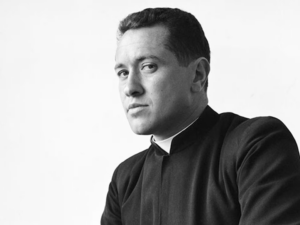
Calling himself Argemiro, the priest quickly became an influential link between the rebels and the church, respected across the political spectrum, and a spiritual influence on socialist movements across the continent.
His most famous quote, still echoing through liberation theology, was: “If Jesus were alive today, he would be a guerrillero”.
A photo of Torres appeared in a flyer printed by the ELN in January 1966, with the academic pictured in uniform clutching a rifle alongside the words: “From the mountains of Colombia, I intend to continue the fight, weapons in hand, until I achieve power for the people. Not one step back! Liberation or death!”.
Friends divided
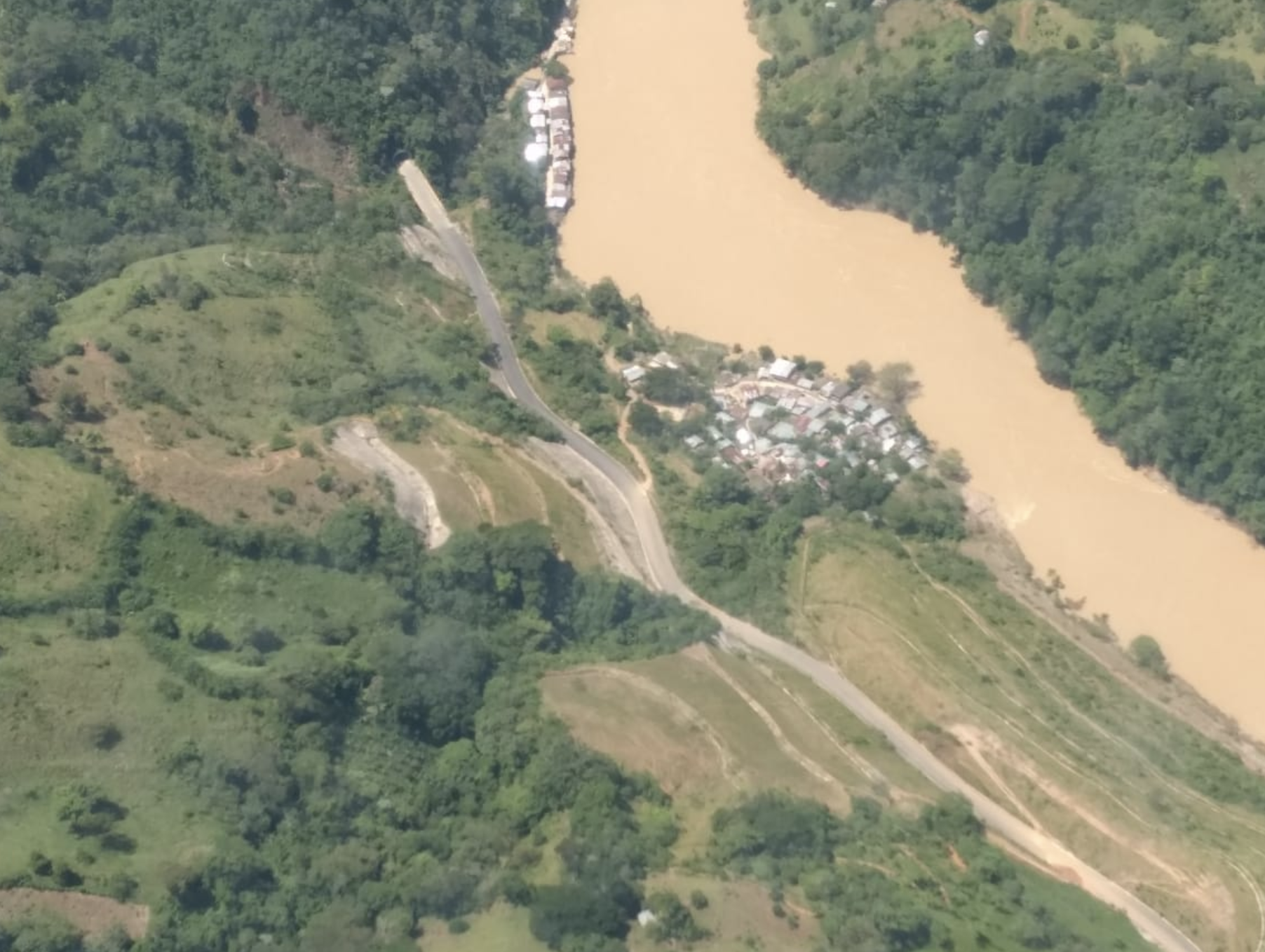
The latter came quicker than expected. Torres was killed in combat aged 37 on February 15, 1966, in his first action against state forces. The firefight took place in the rugged terrain around El Carmen de Chucurí, Santander.
Ironically, the army operation that killed Torres was led by General Álvaro Valencia Tovar, a childhood friend of the rebel priest. In an old article on Las 2 Orillas, the general described the pair’s friendship over many years, even while taking separate political paths; a potent reminder of personal ties tested by Colombia’s civil conflict.
According to Valencia Tovar, the ELN had prepared a deadly ambush in a jungle gorge with 35 fighters – including Torres – lying in wait for an army patrol. But the soldiers, even while taking heavy fire, outflanked the guerrillas and killed five of the ELN fighters. Torres was among the dead.
Thereafter the story was muddled: according to Valencia Tovar, the general himself took Torres’ remains to a military pantheon close to Bucaramanga, the regional capital of Santander, perhaps a form of honour for his former friend. But the exact location was never disclosed, a bone of contention with the guerrilla group who wanted to mourn their martyr.
In another historical twist, years later a video emerged of a young Juan Manual Santos – the future centre-right president of Colombia – declaring he was an “acolyte” of Torres, who was in fact his uncle.
In 2016, the then president Santos, perhaps as a gesture towards his own deceased uncle, but also as a signg of good faith during a peace process with the ELN, promised a state search for the remains of his fallen uncle. That peace process failed, like many others.
Playing for time
Over 70 years of conflict the Ejército de Liberación Nacional has proved hard to pin down: the on-off negotiations with the current Petro government mark the seventh cycle of peace talks spanning seven presidential terms since 1992, with the guerrillas still fighting.
Today, many observers see these negotiation cycles as cynical ploys by the Marxist-Leninist rebels to hold off military pressure while expanding their own territory and illicit activities, which today extends to cocaine production, illegal gold mining, extortion, kidnapping and human trafficking.
According to a profile by thinktank InsightCrime, in the last 20 years the ELN have become increasingly active in neighbouring Venezuela where they act as a mercenary army for the Chavista regime with a strong role on controlling the borders.
That dynamic shifted after the U.S. military operation in early January in Venezuela to detain autocratic leader Nicólas Maduro.
Now less welcome in Venezuela, and facing an increasingly hostile Petro government, even while entangled in a turf war with dissident FARC groups in northeast Colombia, the ELN fighters are feeling the pressure.
Blood and fire
On January 12 this year, the ELN proposed another bite at the peace apple with a new ‘national accord’. This though was quickly rejected by President Petro, who wrote on X that the guerrillas had to renounce their illicit activities – primarily gold and cocaine – before coming to the table.
During the first three years of his term, Petro suffered several perfidies by the ELN such as their surprise attacks on rival groups in the coca enclave of Catatumbo last year that left hundreds dead and thousands displaced.
Responding to the ELN offer Petro, said he had “already offered an agreement, but they destroyed it with blood and fire, and by killing humble peasants”.
It is likely the Colombian president is now holding off until after his meeting with the Trump administration in Washington scheduled for February 3. Any reconciliation between Petro and the U.S. president – their relationship has been rocky – could open the door for increased military support to combat the ELN, designated as a terrorist organization by the U.S. State Department since 1997.
Colombia’s ‘Che‘
Such a deal, combined with changes in Venezuela, could tilt the conflict in favour of Colombian state forces. And while still a potent fighting force, the ELN could prefer an escape route via the negotiation table in 2026 if talks open up with Petro or his successor.
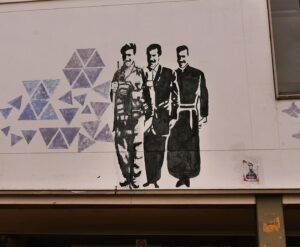
With that in mind, it is probable that finding of Camilo Torres – miraculously close to the 60th anniversary of his death – is no coincidence, but rather a strategy in the poker game between state and guerrillas.
The wait now is for final confirmation of the remains by the UBPD. Meanwhile the search unit is keeping mum on how, where, and when the body was found.
And if the ELN are claiming Torres as their own, then so is Petro: “The body of Father Camilo Torres Restrepo will be respected and laid to rest with honours,” he said on X this week, painting the priest as a national hero.
Perhaps putting him in the spotlight is a nod to Petro’s own rebel credentials as a former member of M-19 guerrilla group. And Torres is a timely reminder of how the ELN rebels – recently accused of human slavery in illicit mining camps – are far removed from their ideological roots.
Where both sides agree is that his final resting place should be the National University campus in Bogotá. That´s a start. Sixty years after his death the fighting priest, seen by some as Colombia’s Che Guevara, could have a new role in bringing peace.